No products in the cart.

Choosing the right door transforms the character and security of any Pennsylvania home, yet many homeowners face confusing claims around what truly sets American-made doors apart. In a world filled with misconceptions about product origins and quality, understanding the difference means looking beyond simple labels to the heart of authentic craftsmanship. Discover how American-made doors blend artistry, robust standards, and local heritage to deliver lasting beauty and peace of mind for your most important investment.
Table of Contents
- Defining American-Made Doors And Common Myths
- Craftsmanship And Quality Assurance Standards
- Material Sourcing And Environmental Impact
- Home Security And Customization Benefits
- Cost, Value, And Comparing Imported Alternatives
Key Takeaways
| Point | Details |
|---|---|
| Understanding American-Made | The designation ‘American-made’ signifies a commitment to domestic craftsmanship and must meet specific federal guidelines. |
| Quality Assurance Standards | American-made doors undergo rigorous quality checks, ensuring durability and aesthetic excellence according to the North American Architectural Woodwork Standards. |
| Environmental Responsibility | Manufacturers prioritize sustainable practices, employing locally sourced timber and minimizing carbon footprints in their production processes. |
| Long-Term Value | While American-made doors may have higher upfront costs, they typically offer greater durability and lower long-term maintenance expenses compared to imported options. |
Defining American-Made Doors and Common Myths
Defining what truly constitutes an “American-made” door involves navigating complex manufacturing and sourcing standards that extend far beyond simple geographic origin. Unlike generic product labels, American-made doors represent a commitment to domestic craftsmanship, local labor, and rigorous quality standards that distinguish them from mass-produced international alternatives.
The landscape of manufacturing has shifted dramatically, creating persistent myths about product origins that can mislead consumers. Critical perspectives on national identity myths reveal how narratives around manufacturing often blur the lines between perception and reality. Several prevalent misconceptions about American-made products require careful examination:
- Origin Myths: Many consumers assume “American-made” means 100% domestic components
- Quality Perceptions: Assumptions that domestic manufacturing automatically guarantees superior craftsmanship
- Price Expectations: Believing American-made products are always more expensive
- Labor Assumptions: Misconceptions about manufacturing workforce and production capabilities
Understanding these nuances requires recognizing that American-made is more than a label—it represents a complex ecosystem of design, material sourcing, labor practices, and manufacturing standards. Local woodworking traditions, commitment to sustainable practices, and preservation of artisan skills contribute significantly to what makes a door authentically American.
The complexity of defining “American-made” extends beyond simplistic national origin claims. Manufacturers must meet specific federal guidelines, including substantial transformation of materials and a significant percentage of production occurring within United States borders. These regulations ensure that the “American-made” designation carries meaningful weight and represents genuine domestic economic contribution.
Pro tip: When evaluating an American-made door, request detailed documentation about component sourcing and manufacturing processes to verify its authentic domestic production credentials.
Craftsmanship and Quality Assurance Standards
American-made doors represent more than just a product—they embody a commitment to exceptional craftsmanship and rigorous quality standards that set them apart in the global marketplace. Architectural Woodwork Quality Certification ensures that each door meets exacting requirements for precision, durability, and aesthetic excellence.
The quality assurance process for American-made doors involves multiple critical stages of evaluation and verification:
- Comprehensive material selection screening
- Detailed fabrication inspections
- Structural integrity testing
- Aesthetic consistency checks
- Performance standard compliance
Manufacturers adhere to the North American Architectural Woodwork Standards (NAAWS), which provide a comprehensive framework for maintaining superior production quality. These standards mandate specific guidelines for woodworking that guarantee each door represents the pinnacle of American craftsmanship.

Professional woodworking organizations play a crucial role in maintaining these elevated standards. The Architectural Woodwork Institute (AWI) conducts both physical and virtual inspections to verify that manufacturers consistently meet the highest industry benchmarks. This multilayered approach ensures that consumers receive doors that are not just products, but true representations of American manufacturing excellence.
The following table summarizes key certification and inspection roles in American door manufacturing:
| Organization | Role | Impact on Quality |
|---|---|---|
| AWI | Conducts inspections | Ensures industry benchmarks |
| NAAWS | Sets construction standards | Guarantees woodworking consistency |
| Independent Labs | Perform performance tests | Certifies strength and durability |
Pro tip: Request certification documentation from your door manufacturer to confirm their adherence to professional woodworking quality standards and validate the authenticity of their craftsmanship.
Material Sourcing and Environmental Impact
American-made doors represent a critical intersection of craftsmanship and environmental responsibility, with manufacturers increasingly prioritizing sustainable material sourcing and ecological consciousness. Wood-Based Door Environmental Lifecycle research highlights the profound importance of responsible material selection and its broader environmental implications.
The sustainable sourcing process for American-made doors typically involves several key environmental considerations:
- Utilizing locally harvested timber
- Implementing forest regeneration programs
- Minimizing transportation-related carbon emissions
- Selecting wood from certified sustainable forests
- Reducing waste through precision manufacturing
Responsible manufacturers go beyond basic material selection, integrating comprehensive environmental strategies that address the entire door production lifecycle. This holistic approach ensures that each door not only meets aesthetic and functional requirements but also contributes to broader ecological conservation efforts.
Modern American door manufacturers are pioneering innovative approaches to minimize environmental impact. By leveraging advanced technologies and sustainable forestry practices, they create products that balance exceptional quality with ecological stewardship. These efforts include using reclaimed wood, implementing energy-efficient production methods, and developing recycling programs for wood waste.
Pro tip: Request documentation about the environmental sourcing practices of your door manufacturer to ensure you’re supporting sustainable production methods.
Home Security and Customization Benefits
American-made doors represent the pinnacle of home security and personalized design, offering homeowners unparalleled protection and aesthetic flexibility. Steel Door Security Features demonstrate how advanced manufacturing techniques translate directly into enhanced home protection.
The security advantages of American-made custom doors include several critical protective elements:
- Advanced multilayered locking mechanisms
- Reinforced structural integrity
- Precision-engineered frame designs
- Compatibility with modern security systems
- Custom fitting to minimize potential entry points
- Impact-resistant materials
Customization represents another significant benefit of choosing American-made doors. Unlike mass-produced alternatives, these doors can be tailored precisely to a homeowner’s specific architectural requirements, personal aesthetic preferences, and unique security needs. This level of personalization ensures that each door is not just a functional barrier, but a carefully crafted component of the home’s overall design and protection strategy.
Modern American manufacturers understand that security goes beyond physical barriers. They integrate cutting-edge technologies and design innovations that create doors which are simultaneously beautiful, unique, and extraordinarily secure. By combining advanced materials, smart technology integration, and artisan craftsmanship, these doors offer homeowners peace of mind without compromising on style.
Pro tip: Request a comprehensive security assessment when selecting your custom door to ensure it meets both your aesthetic and protective requirements.
Cost, Value, and Comparing Imported Alternatives
Choosing an American-made door involves more than just aesthetic considerations—it’s a complex economic decision balancing quality, long-term value, and initial investment. Manufacturing Cost Dynamics reveals the intricate economic factors that influence pricing and consumer choices in the door manufacturing market.
When comparing American-made doors with imported alternatives, several key economic factors emerge:
- Higher upfront manufacturing costs
- Superior material quality
- Enhanced durability and longevity
- Stronger quality control standards
- Direct economic support for domestic labor
- Reduced long-term replacement expenses
Imported doors often appear more affordable initially, but American-made options provide substantial long-term value. The higher initial investment translates into significantly reduced maintenance costs, better performance, and extended lifespan. Homeowners essentially purchase not just a door, but a comprehensive solution that combines craftsmanship, reliability, and economic sustainability.
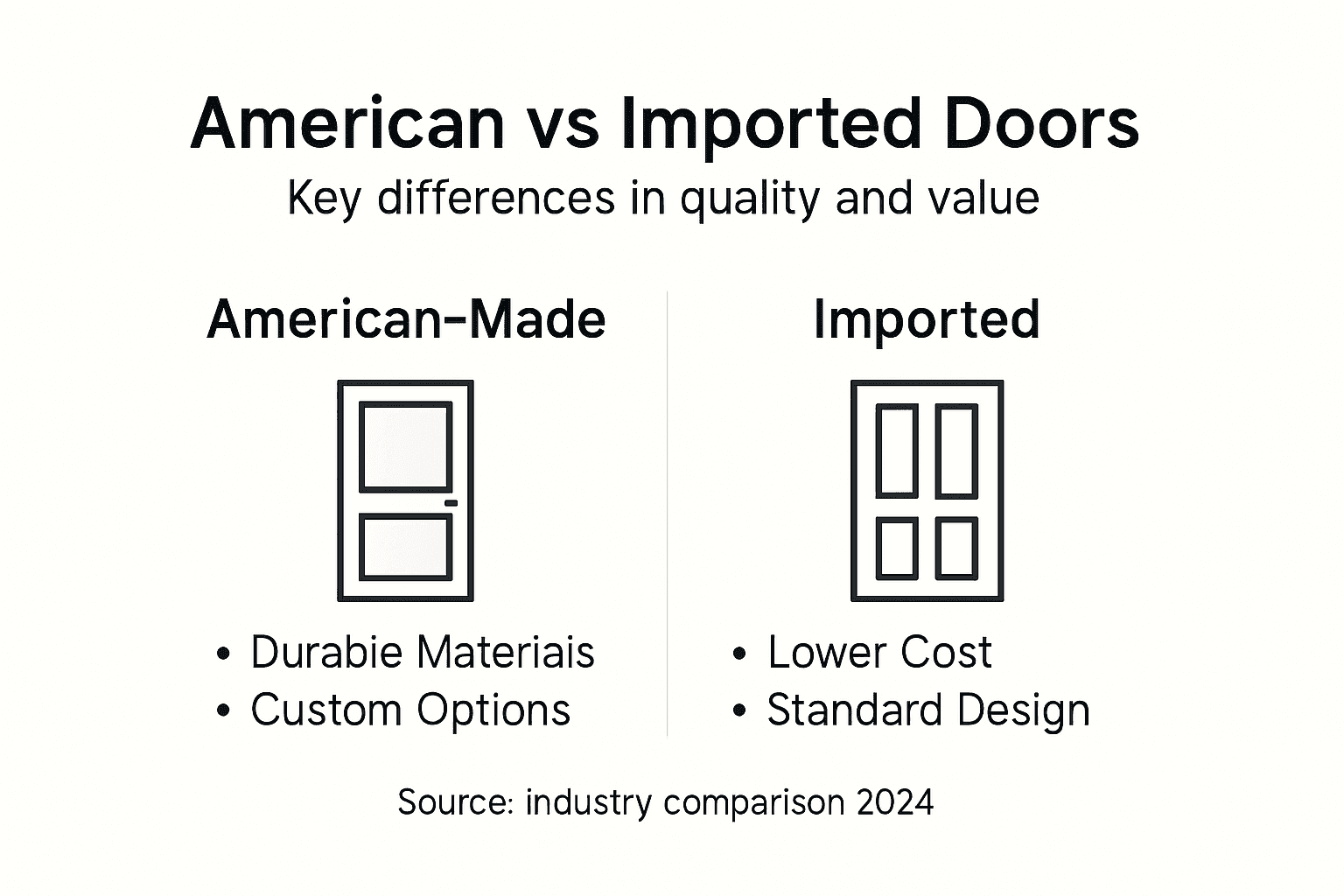
Here is a quick reference to how American-made doors compare with imported alternatives:
| Factor | American-Made Doors | Imported Doors |
|---|---|---|
| Initial Cost | Higher investment | Lower upfront price |
| Quality Control | Strict, certified standards | Variable by manufacturer |
| Longevity | Extended product lifespan | Shorter average lifespan |
| Domestic Economic Impact | Supports local workers | Primarily benefits foreign markets |
| Maintenance Needs | Fewer repairs needed | More frequent repairs |
| Environmental Practices | Focus on sustainability | Often less regulated |
The true economic comparison extends beyond simple price tags. American manufacturers invest heavily in research, development, and precision engineering, which directly translates into superior product performance. While imported alternatives might seem financially attractive at first glance, they frequently compromise on critical aspects like structural integrity, security features, and material resilience.
Pro tip: Calculate the total lifetime cost of your door, including potential maintenance and replacement expenses, not just the initial purchase price.
Discover the True Value of American-Made Doors with Lumber Lovin’
Choosing the right door for your home means more than picking an entryway. It is about embracing authentic craftsmanship, sustainable materials, and unmatched security. The article highlights key challenges such as verifying true American-made origins, understanding quality assurance, and weighing long-term value against initial costs. At Lumber Lovin’, we address these concerns by offering custom-crafted wooden sliding doors handmade in the USA, combining artisan skill with eco-friendly sourcing and superior durability.
Explore our Craft Chronicles – Lumber Lovin’ to learn more about our craftsmanship philosophy and how we uphold rigorous quality standards.
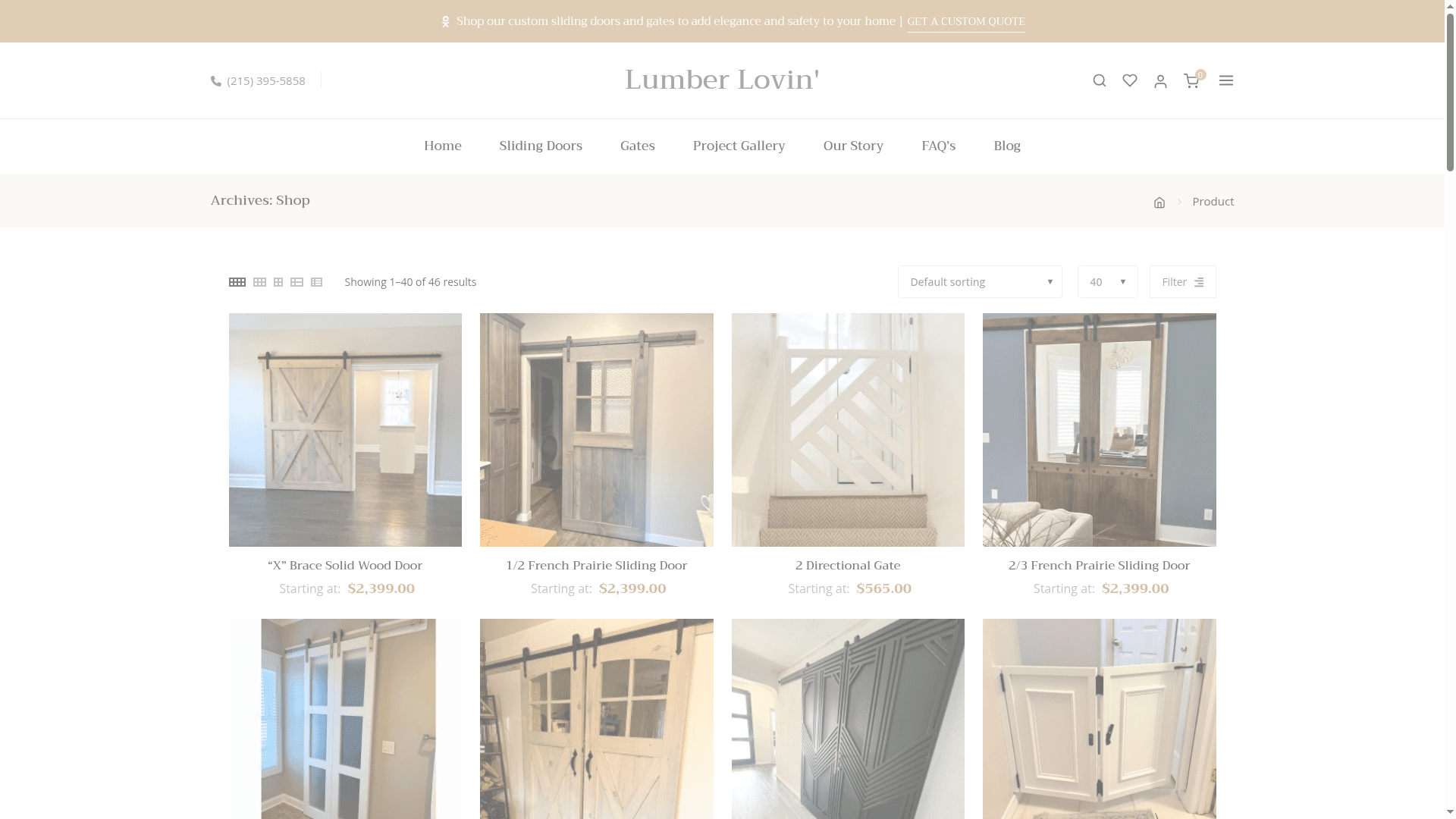
Take the next step toward elevating your home’s appeal with doors that provide beauty and security while supporting American artisans. Visit our full collection at Lumber Lovin’ Shop today and request a personalized quote to experience the enduring value of genuine American-made doors.
Frequently Asked Questions
What defines an American-made door?
American-made doors are characterized by a commitment to domestic craftsmanship, local labor, and adherence to federal guidelines for manufacturing, ensuring substantial transformation of materials and significant production within the United States.
What are the quality assurance standards for American-made doors?
American-made doors are subject to rigorous quality assurance processes, including material selection screening, fabrication inspections, structural integrity testing, and compliance with the North American Architectural Woodwork Standards (NAAWS).
How do American-made doors contribute to environmental sustainability?
American-made doors often utilize locally harvested timber, implement forest regeneration programs, and prioritize sustainable sourcing practices, minimizing transportation emissions and reducing waste during manufacturing.
Are American-made doors worth the higher initial cost compared to imported options?
While American-made doors may have a higher upfront cost, they typically offer superior quality, longer durability, and reduced maintenance needs, resulting in better long-term value for homeowners.
Recommended
- The Benefits of Handmade vs. Mass-Produced Furniture: Why Custom Craftsmanship Wins – Lumber Lovin’
- British Brace Solid Wood Door – Lumber Lovin’
- Industrial Slat Solid Wood Door – Lumber Lovin’
- Complete Guide to Sliding Door Maintenance for Homeowners
- Why Buy American Made: Impact on Home and Heart – FunLifeNow
- Blinds for French Doors: Complete Guide to Styles and Fit
- Shutters for French Doors: A Complete Guide | Shutter World